
Tri-Ply Stainless Steel vs Non-Stick: Which Fry Pan Should You Buy?
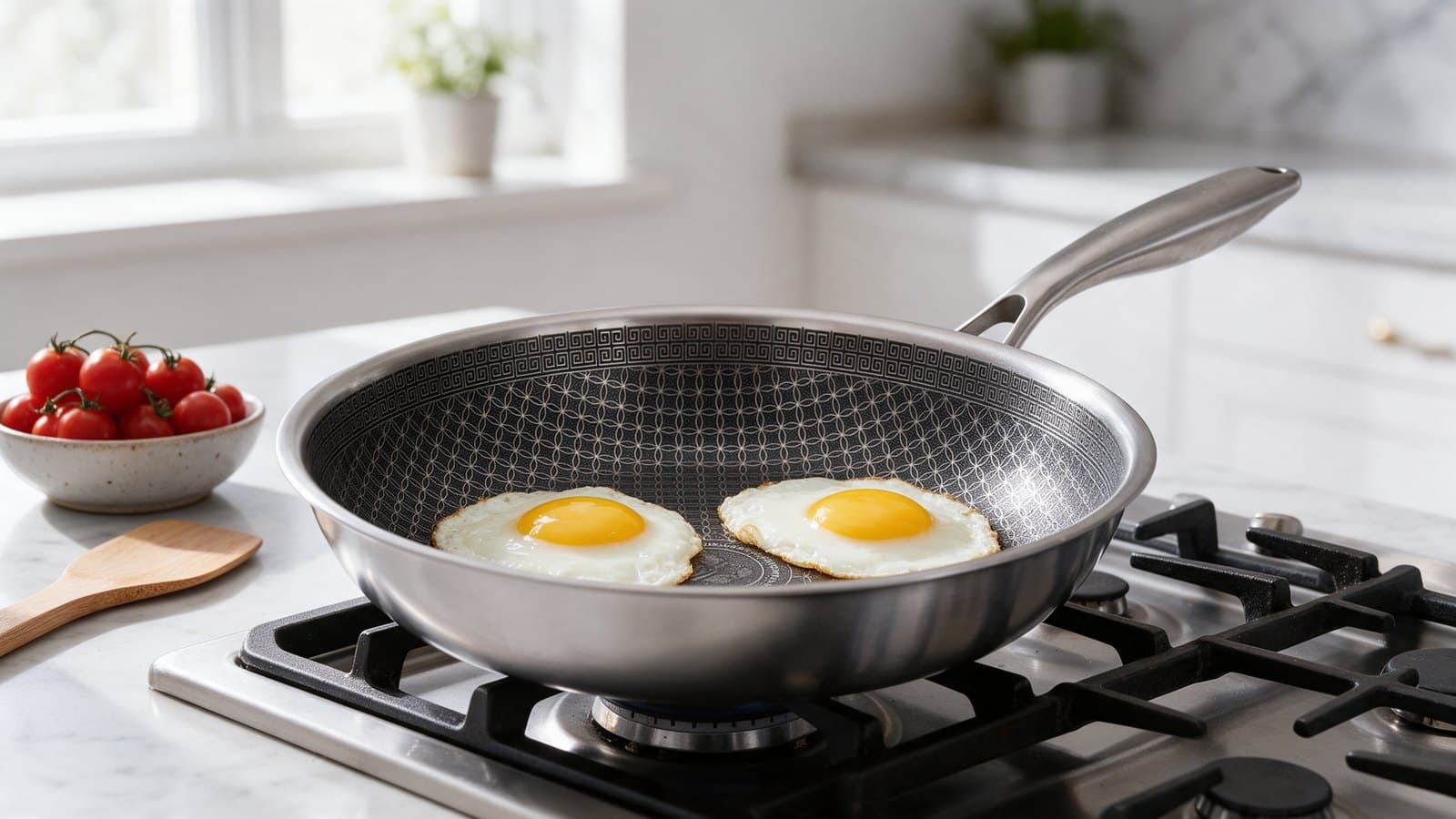
"Should I buy a stainless steel pan or a non-stick one?" is the question we hear most often at the counter, and the honest answer is that the two pans do different jobs. This guide explains what each is good at, what a tri-ply body actually is, why a honeycomb surface behaves differently from a coating, and which pan to reach for depending on what you cook.
Two different tools
A coated non-stick pan has a layer of granite or ceramic-style coating bonded to an aluminium body. Its strength is easy release at low-to-medium heat: eggs, pancakes, fish fillets, anything delicate. Its limits are heat (coatings should never be run empty on high) and lifespan — every coating wears eventually, faster if you use metal tools.
A stainless steel pan has no coating at all. It takes high heat happily, browns meat properly, deglazes into a sauce, and survives metal utensils and the dishwasher for decades. Its traditional weakness is sticking — unless the surface is designed to stop it.
What "tri-ply" means
Plain stainless steel is a poor heat conductor, so a cheap single-layer stainless pan develops hot spots directly over the flame. A tri-ply pan solves this with a bonded sandwich of three metals:
- 316 stainless steel on the cooking side — the most corrosion-resistant food-grade grade, used in medical and marine equipment.
- An aluminium core that spreads heat quickly and evenly across the whole base and up the walls.
- 430 stainless steel on the outside — magnetic, so the pan works on induction.
The result heats evenly from centre to edge, holds its temperature when you add cold food, and works on gas, electric, ceramic and induction hobs alike. Our Tri-Ply Stainless Steel Fry Pan is built exactly this way, with a long brushed-steel handle.
Honeycomb: non-stick without a coating
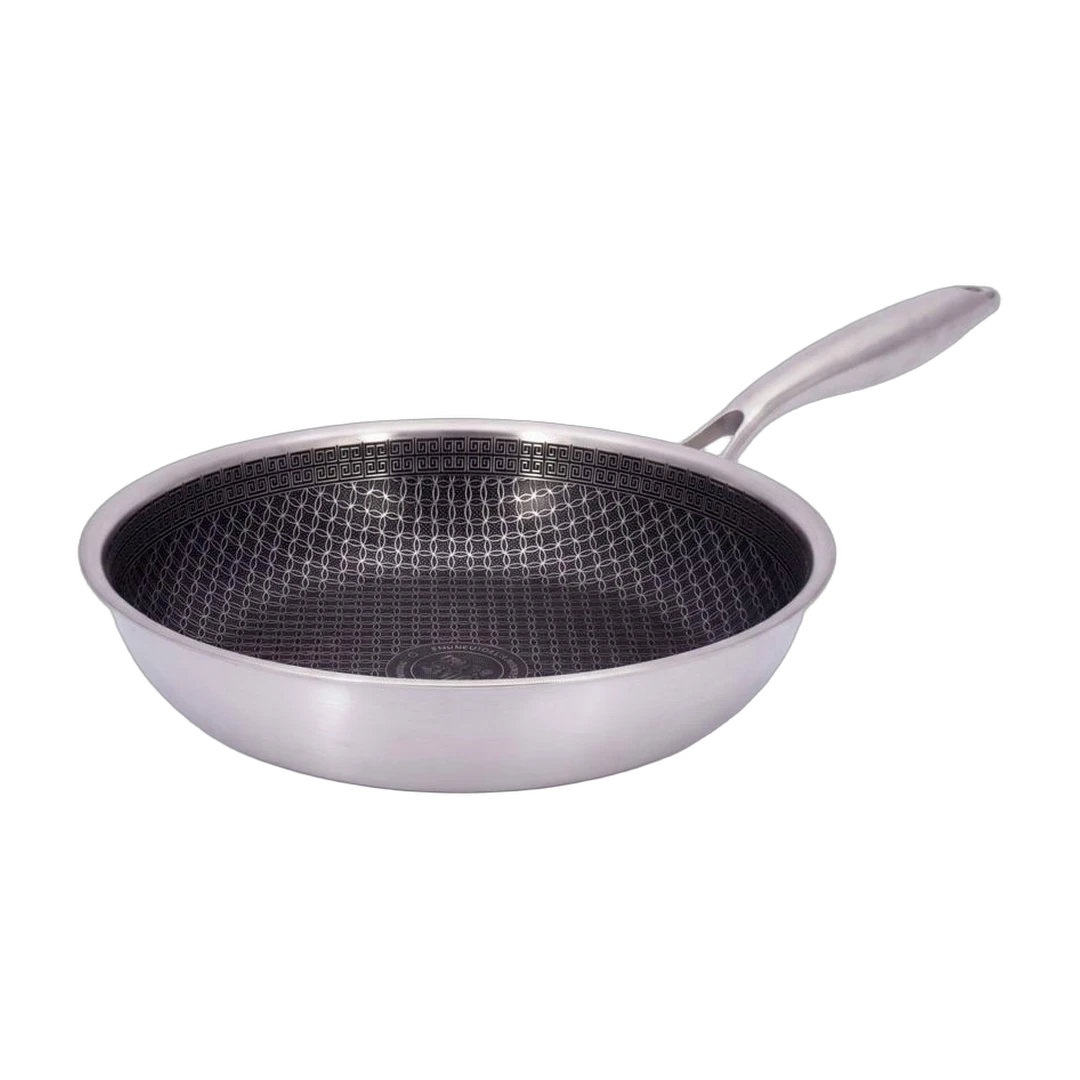
The cooking surface of the MARC tri-ply pan is etched with a raised honeycomb pattern. Food rests on the tops of the honeycomb rather than the full flat surface, so the contact area is much smaller and oil pools in the recesses between the ridges. That gives a genuine non-stick effect — but because it is a physical texture in the steel, not a chemical layer, there is nothing to peel, chip or wear through. The pan is PFAS-free by construction, metal utensils are fine, and you can preheat it as hard as you like.
It is not identical to a coated pan, though. Two things make the difference:
- Preheat properly. Heat the empty pan on medium for a couple of minutes until a drop of water skates across the surface, then add oil, then food. Cold-pan cooking is the number one cause of sticking on any stainless pan.
- Let it release. Meat and fish will grip the surface at first and let go on their own once a crust forms. Do not fight it with the spatula; wait thirty seconds and it lifts cleanly.
Which one for which job?
| Cooking | Reach for | Why |
|---|---|---|
| Fried and scrambled eggs, omelettes | Either | Coated is more forgiving; honeycomb works well once preheated. |
| Searing steak, lamb chops, chicken thighs | Tri-ply | High heat, proper browning, fond for a pan sauce. |
| Pancakes, crêpes, dosa | Coated | Low heat, delicate batter, effortless flip. |
| Stir-fries and vegetables | Tri-ply | Takes the heat a wok-style fry needs. |
| Fish fillets with skin | Tri-ply | Crisp skin needs a hot, dry surface. |
| Pizza, flatbread, tortilla | Tri-ply pizza pan | Flat, shallow 24 cm surface made for it. |
| Long simmering, tomato sauces | Either | 316 steel is non-reactive; granite coating is too. |
Sizes: which fry pan diameter?
Diameter is measured across the top rim, so the flat cooking base is a few centimetres smaller. The MARC tri-ply range covers the everyday spread:
- 20 cm — two eggs, a single portion, sauces. The one that lives on the hob.
- 22 cm — one or two people's daily pan.
- 24 cm — the family default: four eggs, two chicken breasts, a vegetable stir-fry.
- 28 cm and 30 cm — batch cooking, a full pack of chicken, weekend breakfast for the house. Check that your largest burner is wide enough to heat the base evenly.
- 24 cm pizza pan — a shallow, flat-based pan for pizza, flatbread, paratha and searing.
Caring for a stainless pan so it lasts a lifetime
- Let it cool for a few minutes before washing; plunging a hot pan into cold water can warp any base over time.
- Stuck-on food lifts with a soak in hot water and a nylon brush. For stubborn spots, a little baking soda and a non-scratch sponge do the job; skip steel wool and bleach, which mark any stainless steel.
- White chalky spots are minerals from hard water, common in the UAE. Wipe with a cloth dipped in white vinegar and they disappear.
- Blue or gold "rainbow" tints come from high heat. They are harmless and also come off with vinegar.
Our recommendation
If you only want one pan, buy the tri-ply: it does everything a coated pan does with slightly more technique, and everything a coated pan cannot, for decades. If you cook a lot of delicate breakfast food and want zero-effort release, keep one coated pan from a granite cookware set alongside it, reserved for low heat.
Browse the full Tri-Ply Stainless Steel Fry Pan range in 20, 22, 24, 28 and 30 cm plus the 24 cm pizza pan, delivered across the UAE.