
Induction Cooking 101: Is Your Cookware Compatible?
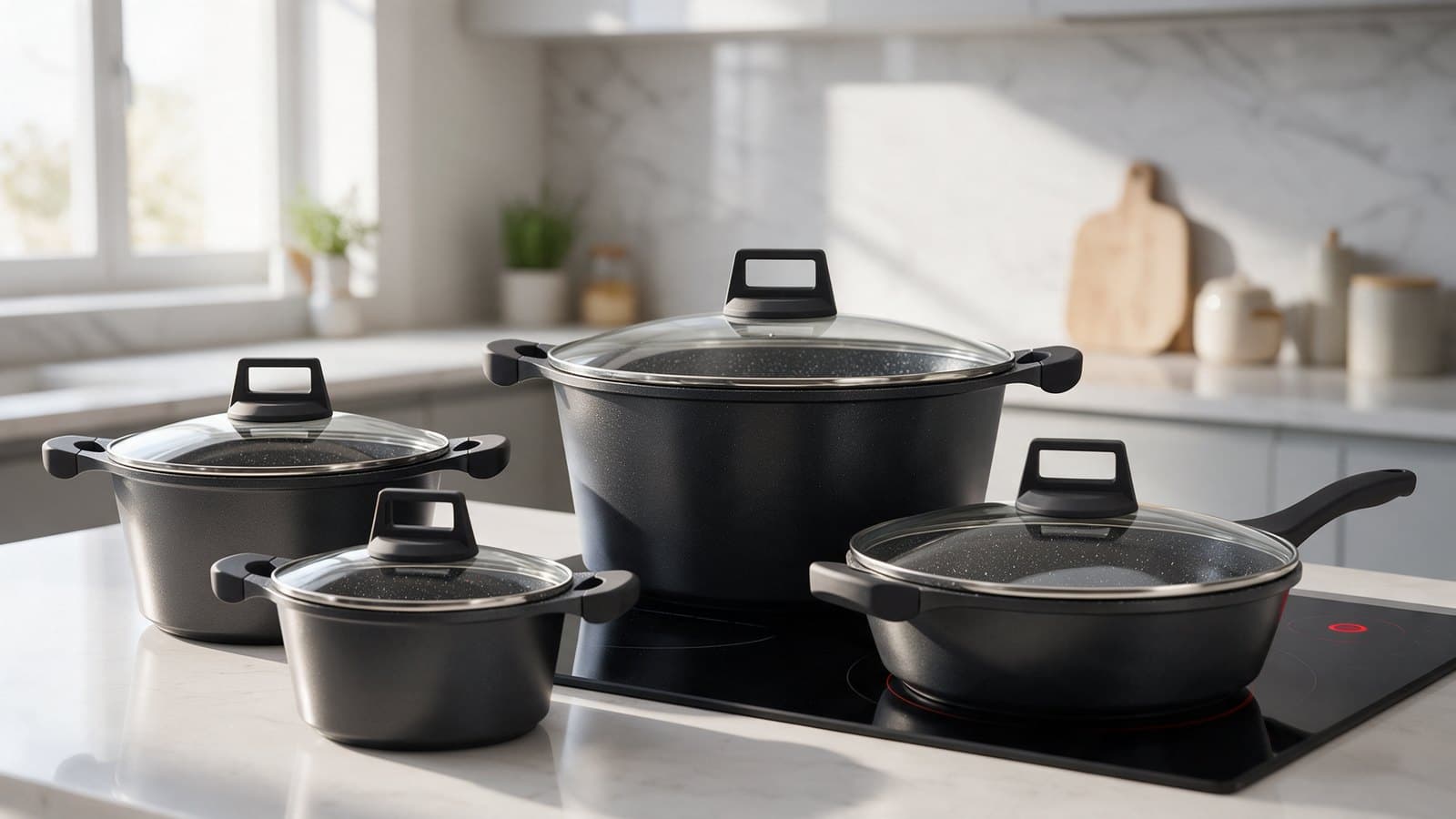
More and more UAE apartments are handed over with an induction hob instead of gas, and the first surprise for many new tenants is that half their old pots do not work on it. Nothing is broken — induction simply needs a different kind of base. This guide explains how induction works, the ten-second test to check any pan you already own, what to look for when buying new cookware, and how to get the best from a hob that is faster and cleaner than gas once you know its habits.
How induction works (in one paragraph)
Under the glass of an induction hob is a copper coil. When you switch a zone on, the coil creates a rapidly changing magnetic field. Place a pan with a magnetic base on the zone and the field induces electric currents directly in the metal of the pan, which heat it. The glass itself stays relatively cool; it only warms from contact with the hot pan. No flame, no glowing element — the pan is the heating element.
That has three consequences. It is very fast (a litre of water boils in around three minutes). It is precise, because the power changes instantly when you adjust it. And it only works with a pan the magnet can grip.
The fridge-magnet test
Take any magnet — a fridge magnet will do — and hold it against the underside of the pan. If it snaps on firmly, the pan works on induction. If it slides off or barely clings, it does not. That is the entire test.
- Works: cast iron, enamelled cast iron, magnetic stainless steel (400-series), any pan with an "induction base" or the coil symbol on the bottom.
- Does not work: plain aluminium, copper, glass, ceramic, and many older stainless pans made only from non-magnetic 304 steel.
What "induction base" means on modern cookware
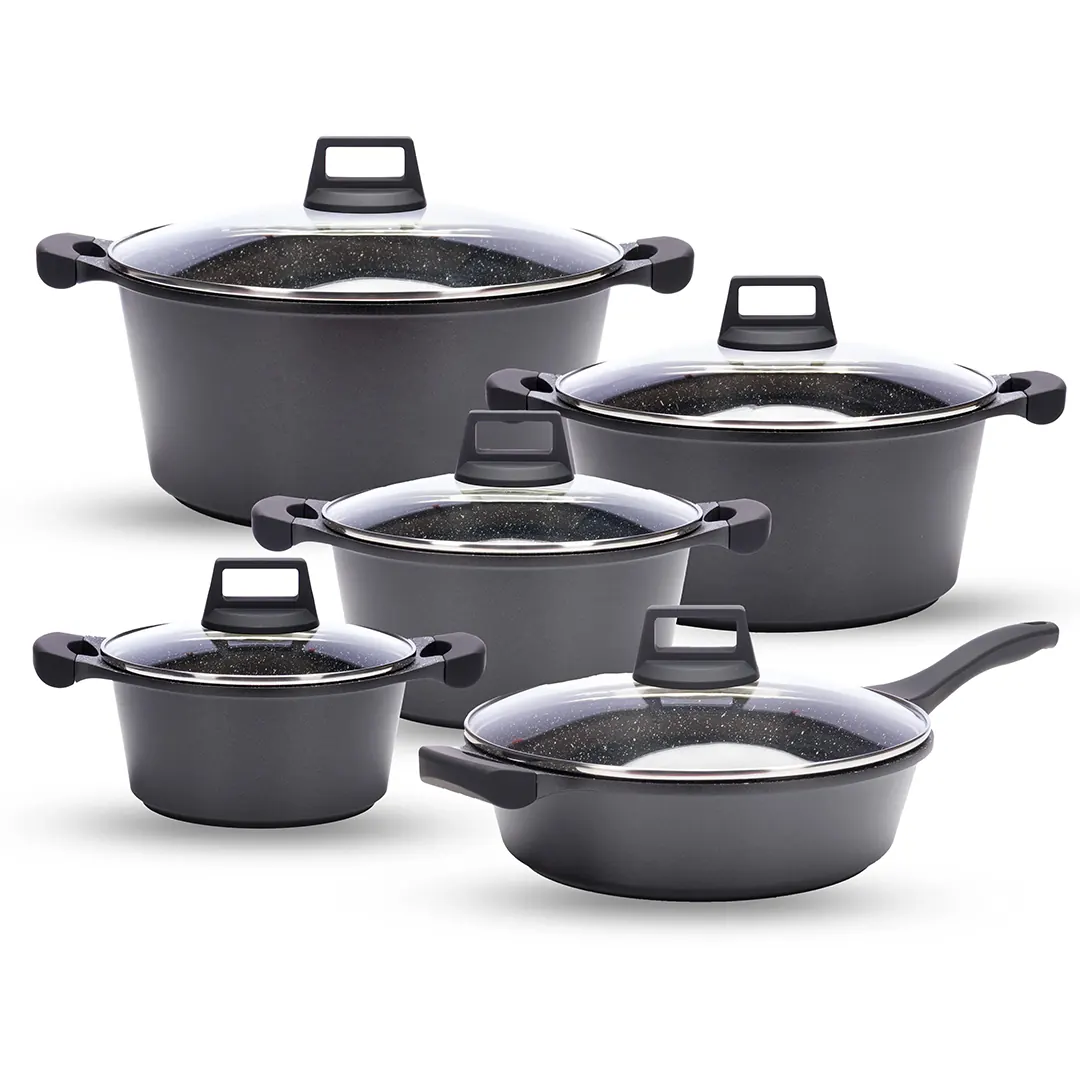
Aluminium is a superb heat conductor but is not magnetic, so most modern non-stick cookware is aluminium with a magnetic stainless disc bonded to the base. The hob heats the disc, the aluminium spreads that heat evenly across the whole pan. This is the best of both: the even heating of aluminium with induction compatibility.
Every set in our granite cookware collection is built this way — for example the 10-piece Granite Non-Stick Set with Induction Base, which works on induction, gas, electric and ceramic without any adaptor plate.
Stainless steel cookware takes a different route. A tri-ply pan sandwiches an aluminium core between 316 steel inside and magnetic 430 steel outside — the outer layer is what the hob grips. And a stainless pressure cooker with an encapsulated base works the same way.
Buying checklist for an induction kitchen
- Magnetic base — look for the coil symbol or the words "induction compatible" on the product page, or do the magnet test in the shop.
- Flat base. Induction needs full contact with the glass. Warped or ridged bases heat unevenly and can make the hob buzz.
- Base diameter that matches your zones. Most hobs will not detect a pan smaller than about 12 cm, and a pan much larger than the zone heats only in the middle. A 24 cm fry pan on a 21 cm zone is fine; a 30 cm pan on a 14 cm zone is not.
- A heavier base is better. Thin discs can separate or warp under fast induction heating. The MARC sets use a thick bonded base for exactly this reason.
- Glass lids with steam vents let you watch without lifting and prevent boil-over, which matters when the hob responds as fast as induction does.
Cooking habits that make induction shine
- Start lower than you think. Induction delivers power instantly; a setting that would be "medium" on gas is often "high" on induction. Non-stick pans in particular should stay below the top settings — the coating never needs it.
- Do not preheat a non-stick pan empty on high. On gas this is merely bad practice; on induction the pan can pass 250 °C in under a minute. Add oil or food first.
- Keep the base dry and clean. A drop of water between pan and glass will spit; a grain of sugar will burn onto the glass. Wipe both before cooking.
- Slide, do not drag. Lift pans onto the glass rather than sliding them; grit under a base is what scratches an induction hob.
- Use the boost function for water, not for oil. Boost is designed for bringing a pot of water to the boil; using it under a pan of oil is a fire risk.
Frequently asked questions
Can I use an adaptor plate for my old pans?
You can, but it turns the fastest hob into the slowest: the plate heats up and then heats the pan by contact, losing most of the efficiency and precision. It is a stop-gap, not a solution.
Why does my pan click or hum on induction?
Light humming on high power is normal, especially with lighter pans. Loud buzzing or clicking usually means the base is not flat or the pan is too small for the zone.
Are granite non-stick sets safe on induction?
Yes. The heat is generated in the base, not in the coating; the coating sees the same temperatures as on any other hob. Just avoid the highest settings with an empty pan.
Does induction work in a power cut?
No — it is fully electric. If your building has frequent cuts, a gas ring or a small camping stove is a sensible backup.
Everything in the MARC cookware range is induction-ready. Browse granite cookware sets, the tri-ply fry pans and the stainless pressure cooker — all delivered across the UAE with cash on delivery available.