
Dish Rack Buying Guide: 2-Tier or 3-Tier, and Why Auto Drainage Matters
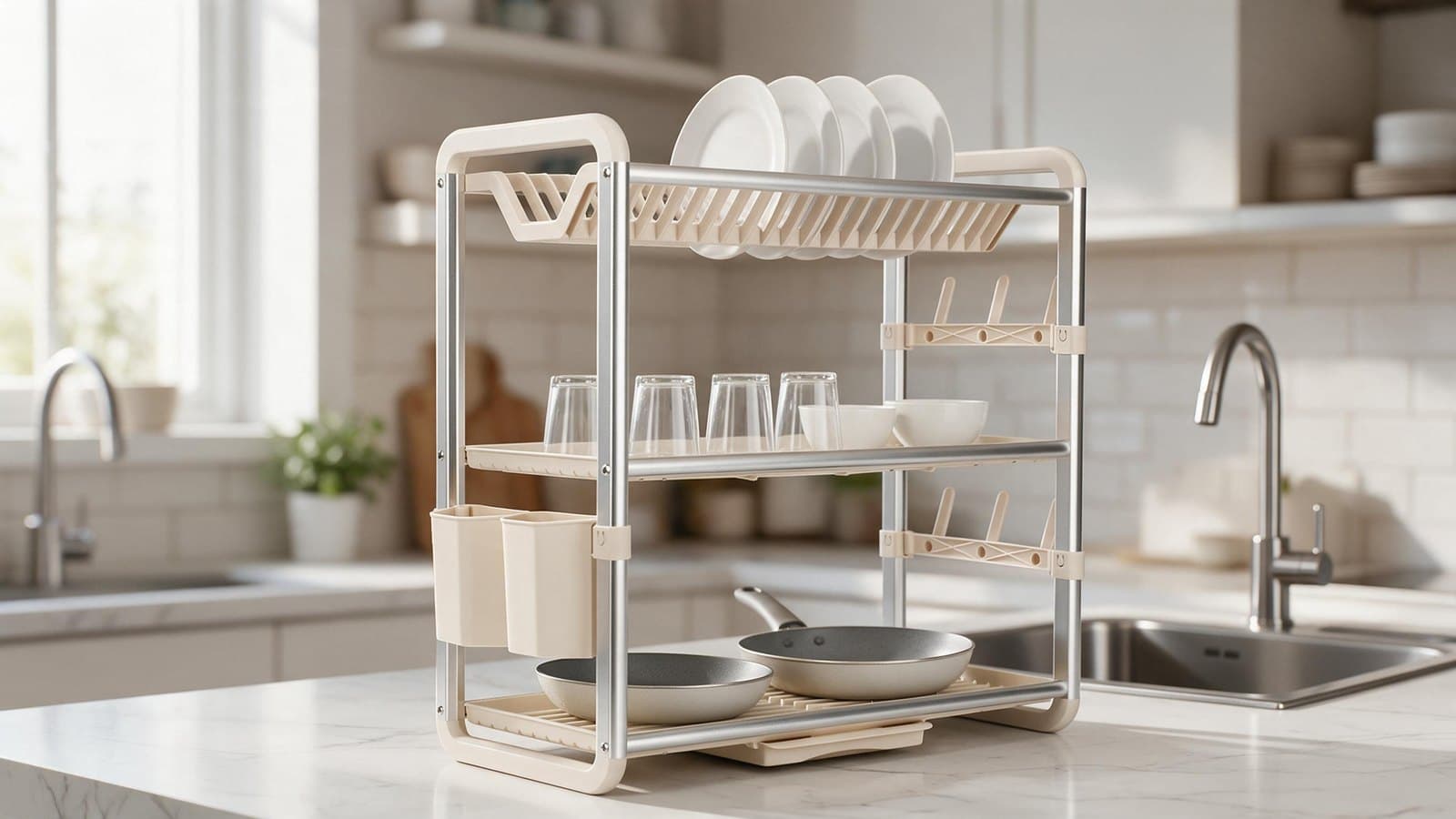
A dish rack is the most-used piece of equipment in most kitchens and the one people think about least. The wrong one rusts within a year, drips water across the counter and holds four plates before it overflows. The right one keeps the sink area dry, doubles the drying space without taking more floor space, and outlasts the kitchen. This guide explains what to look for, and when a two-tier rack is enough and when you should go for three.
Material first: why aluminium
Most dish racks fail in the same way — rust. Chrome-plated steel racks look good on day one, but the plating chips where plates rub, and in the constant damp of a sink area orange rust follows within months. Plastic racks do not rust but they bow under the weight of pans, stain, and the trays go cloudy.
Aluminium does not rust at all. It is light enough to lift and rinse in the sink, stiff enough to hold a stack of heavy plates without sagging, and it keeps its brushed finish for years. Both MARC racks are built from an aluminium frame with removable food-safe trays, which is why they are built for years rather than seasons.
The feature that keeps your counter dry: auto drainage
A tray under the rack is not enough. Water pools, goes stagnant and needs emptying every day — or it does not get emptied and the tray grows a film. Auto drainage solves this with a sloped tray and a small spout that channels the water into the sink continuously, so the tray is always empty and the counter stays dry. Position the rack beside the sink with the spout over the edge and you will not think about it again.
Both the 2 Layer Aluminum Dish Rack and the 3 Layer Aluminum Dish Rack have this system.
Two tiers or three?
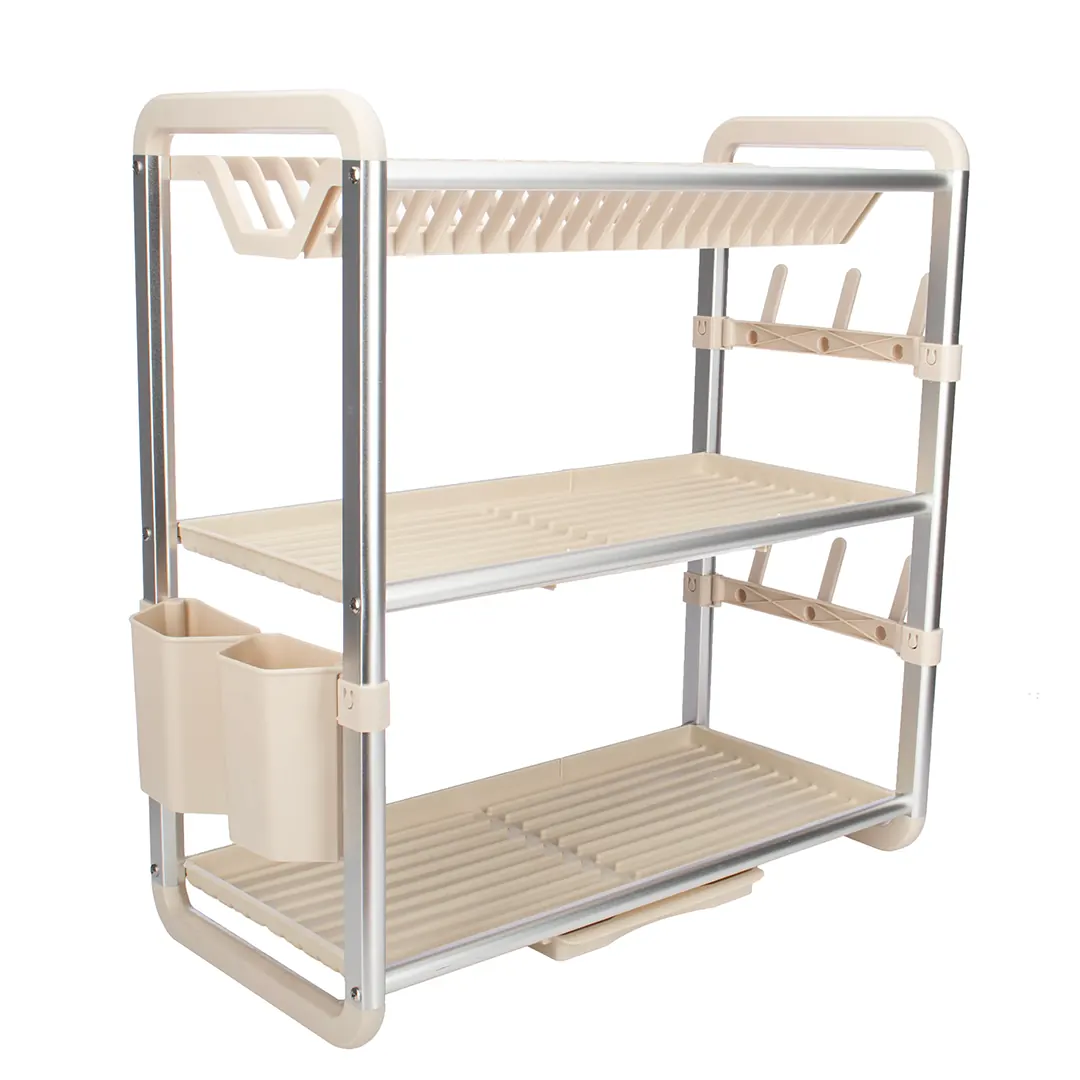
Think about a normal evening's washing up, not the maximum you can imagine.
Choose the 2-tier rack if:
- You are one or two people, or a small family that runs the dishwasher for the heavy loads.
- Counter space is tight, or there is a wall cabinet not far above the counter — the 2-tier is lower and lighter.
- You mainly hand-wash plates, glasses and cutlery, with pans going elsewhere.
Choose the 3-tier rack if:
- You hand-wash for a family of four or more, or cook every day.
- You want a permanent home for pots and pans: the bottom tier is deep enough for a casserole and a fry pan side by side, which keeps them off the counter.
- You have a tall backsplash area and want to use height instead of counter depth. The 3-tier holds roughly twice the crockery of the 2-tier on the same footprint.
Both racks include a slotted plate section, cutlery holders and side hooks for cups and utensils, so the choice is purely about capacity.
Where to put it
- Directly beside the sink, with the drainage spout over the sink rim. This is the whole point of auto drainage.
- Not under a wall cabinet if you can help it — trapped steam from hot dishes will eventually mark the cabinet base.
- Away from the hob. Oil mist settles on drying dishes.
Loading it properly (dishes dry faster)
- Plates go in the slotted section, facing the same direction, with a finger's width between them.
- Glasses and cups go upside-down on the middle tier or the side hooks, never on the plate section where they trap water.
- Pans go on the bottom tier at an angle, handle out, so air reaches the inside.
- Cutlery goes handle-down in the holders so the eating end dries clean and untouched.
- Give it air: do not drape a tea towel over the rack, which just holds the moisture in.
Keeping it clean in a humid kitchen
The UAE's humidity means a dish rack that is never cleaned will develop a film of limescale and soap residue. Once a week, lift the trays out and rinse them; once a month, wipe the frame and trays with a cloth dipped in white vinegar and water, which dissolves the limescale spots that hard tap water leaves behind. The trays on both racks lift straight out for rinsing.
Frequently asked questions
Will the aluminium frame scratch my countertop?
No — the frame ends are capped, so there is no bare metal edge against the counter.
Can the 3-tier hold heavy pans?
Yes. The bottom tier sits directly on the frame and takes a full-sized cast pan or a pressure cooker without flexing.
Does it fit a standard apartment sink area?
The 2-tier fits comfortably in the space beside a single-bowl sink; the 3-tier needs about the same counter depth but more height. Measure the gap under any wall cabinet before choosing.
See both the 2 Layer and 3 Layer Aluminum Dish Rack in our dish racks collection, delivered across the UAE with cash on delivery.